


The phrase “The Bitter Housewife” has become increasingly visible across blogs, social commentary, and search engines, often sparking curiosity about what it truly means. At first glance, it may sound like a simple label describing a dissatisfied homemaker, but in reality, it carries much deeper cultural and emotional undertones. The term is often used to explore themes of identity, emotional labor, and the evolving role of women within domestic life. Because of its emotionally charged wording, it tends to attract attention and provoke discussion.
In modern digital culture, phrases like this spread quickly because they resonate with personal experiences or perceived social truths. Whether used literally or symbolically, “The Bitter Housewife” reflects conversations about expectations placed on women, the pressures of household responsibilities, and the emotional complexity that can exist within marriage or long-term partnerships. It is less about a single definition and more about a shared cultural reflection.
Understanding this phrase requires looking beyond its surface meaning and exploring the societal, psychological, and cultural layers that shape it. From internet trends to real-life emotional struggles, the concept has become a lens through which people examine fulfillment, frustration, and identity in domestic roles.
Understanding the Meaning of “The Bitter Housewife”
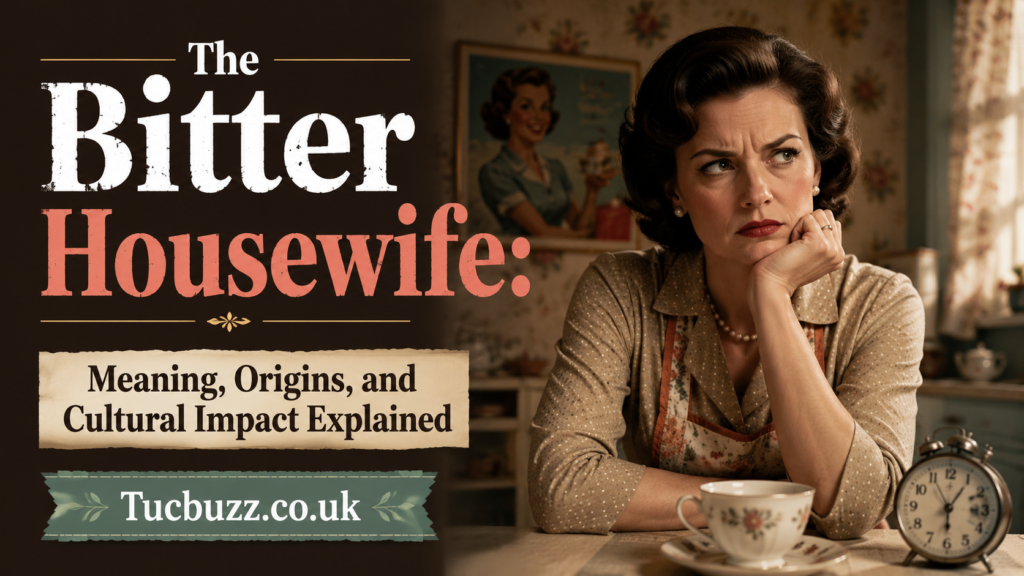
The term “The Bitter Housewife” does not have a single fixed definition, but it is generally used to describe a state of emotional dissatisfaction associated with domestic life. The word “bitter” often implies resentment, disappointment, or unfulfilled expectations, while “housewife” refers to a person primarily responsible for managing a household. When combined, the phrase can reflect a complex emotional identity rather than a literal label.
In many interpretations, it symbolizes the emotional burden that can arise when household responsibilities are undervalued or taken for granted. This does not mean every housewife fits this description, but rather that the phrase captures a specific narrative found in storytelling, blogs, and online discussions. It can represent feelings of being stuck in routine, lacking personal recognition, or struggling to maintain individuality while managing family duties.
However, it is important to understand that the phrase is also used metaphorically. In some cases, it is not about domestic life at all but about emotional fatigue in relationships or life circumstances. It becomes a broader symbol of unmet expectations and internal conflict. Because of this, the meaning often shifts depending on context, making it a flexible yet emotionally charged expression.
Origins and Evolution of the Term
The exact origin of “The Bitter Housewife” is difficult to trace, but its rise is closely tied to internet culture and lifestyle commentary. Over time, blogs, personal essays, and social media posts began using emotionally descriptive language to express the realities of domestic life. This phrase likely evolved as part of that broader movement, where personal storytelling became a powerful form of digital expression.
Historically, the role of a housewife has undergone significant transformation. In earlier generations, it was often seen as a fixed domestic identity, while modern perspectives emphasize choice, independence, and shared responsibilities. As societal expectations shifted, so did the language used to describe emotional experiences within those roles. “The Bitter Housewife” emerged as a reflection of this tension between traditional expectations and modern realities.
The internet amplified the spread of such phrases by giving individuals a platform to share personal narratives. What may have once been private frustrations became part of public discourse. Over time, the phrase gained symbolic meaning, representing not just individuals but broader conversations about gender roles, emotional labor, and personal fulfillment.
Cultural and Social Context
The cultural significance of “The Bitter Housewife” lies in its connection to changing social norms. In many societies, housewives have traditionally been associated with caregiving, household management, and emotional support roles. While these responsibilities are essential, they have not always been equally recognized or valued, leading to discussions about imbalance in emotional and physical labor.
Modern cultural conversations increasingly highlight how domestic work is shared—or not shared—within households. The phrase often appears in discussions about inequality in relationships, where one partner may feel overwhelmed by responsibilities that go unnoticed. It reflects a broader awareness of emotional labor, which includes the unseen effort required to maintain family harmony, organize daily life, and manage relationships.
From a social perspective, the term also intersects with feminist discourse. It raises questions about identity, autonomy, and fulfillment beyond traditional domestic roles. Rather than defining housewives negatively, it is often used to critique systems that may limit personal growth or recognition. This makes it less about individuals and more about structural expectations placed on them.
Psychological and Emotional Interpretations
From a psychological standpoint, the idea behind “The Bitter Housewife” can be linked to emotional stress, burnout, and identity conflict. When individuals dedicate significant time to caregiving or household responsibilities without adequate recognition or personal fulfillment, feelings of frustration may develop. These emotions are not unique to housewives but can appear in any role involving repetitive or undervalued labor.
A key aspect often discussed is identity loss. When personal goals, hobbies, or ambitions are overshadowed by daily responsibilities, individuals may begin to feel disconnected from their sense of self. This can lead to emotional fatigue and a perception of stagnation. The term “bitter” in this context reflects emotional exhaustion rather than inherent negativity.
However, psychology also emphasizes that such feelings are not permanent or universal. Many people find ways to rebuild identity, create balance, or redefine their roles within the household. Open communication, shared responsibilities, and personal time are often highlighted as important factors in maintaining emotional well-being.
The Role of Internet Culture and Virality
In today’s digital landscape, phrases like “The Bitter Housewife” gain traction because they are emotionally evocative and relatable. Social media platforms thrive on content that reflects real-life experiences, especially those involving relationships and personal identity. As a result, emotionally charged keywords tend to spread quickly and become part of online discussions.
Blogs and content creators often use such phrases to attract engagement and explore deeper narratives. The combination of curiosity and emotional resonance makes them highly searchable. People may encounter the term in a post or article and search for its meaning, contributing to its viral growth.
Internet culture also tends to amplify specific perspectives, sometimes oversimplifying complex experiences. While the phrase may originate from nuanced storytelling, its repetition online can lead to generalized interpretations. This highlights how digital platforms shape the way language evolves and how meanings are perceived by wider audiences.
Conclusion
The phrase “The Bitter Housewife” is more than just a descriptive label—it is a reflection of evolving social roles, emotional experiences, and cultural conversations. While it may suggest dissatisfaction on the surface, its deeper meaning is rooted in identity, recognition, and the complexities of domestic life.
As society continues to shift toward more balanced and inclusive household structures, the interpretation of such terms also evolves. Rather than viewing it as a fixed identity, it is more useful to understand it as a narrative lens that highlights emotional realities and social expectations. Ultimately, it serves as a reminder of the importance of empathy, communication, and shared understanding within relationships.
You may read: Smart Feedback