
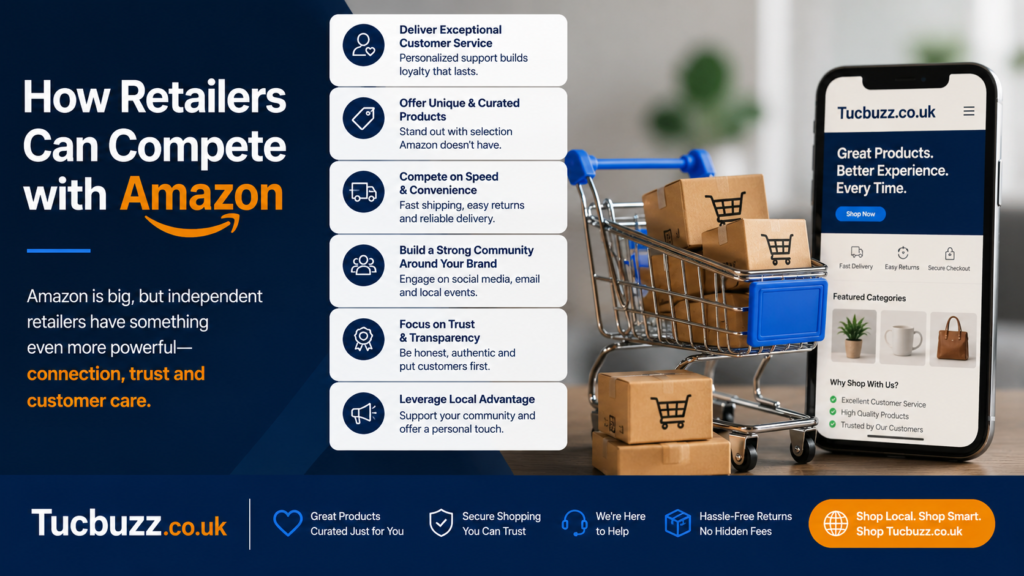

The global retail landscape has been reshaped by the rise of How can retailers compete with amazon, a platform that has set new benchmarks for convenience, speed, and scale. For many retailers, Amazon feels less like a competitor and more like an unavoidable force that dominates search results, customer expectations, and pricing norms. However, competing with Amazon does not require retailers to mirror its business model or outspend it on logistics and technology. Instead, success lies in understanding where Amazon excels and where it falls short.
Retailers who thrive alongside Amazon adopt a mindset of strategic differentiation rather than direct confrontation. They focus on creating value that goes beyond fast shipping and low prices. Human connection, brand authenticity, niche expertise, and superior customer experiences are areas where independent and mid-sized retailers can outperform large marketplaces. By leaning into these strengths, retailers can carve out defensible positions in an otherwise crowded market How can retailers compete with amazon.
Ultimately, the question is not whether retailers can beat Amazon at its own game, but how they can build businesses that customers actively choose over Amazon. This article explores practical, scalable strategies that enable retailers to remain competitive, profitable, and relevant in the age of e-commerce giants How can retailers compete with amazon.
Understanding How can retailers compete with amazon
How can retailers compete with amazon is rooted in its unmatched scale and operational efficiency. With millions of products available across nearly every conceivable category, Amazon has become the default shopping destination for countless consumers. Its vast marketplace model allows third-party sellers to expand selection rapidly while Amazon benefits from data, fees, and increased customer retention. This breadth gives customers the perception that they will always find what they need in one place.
Another key advantage is logistics. How can retailers compete with amazon investment in fulfillment centers, last-mile delivery, and automation enables fast and reliable shipping, often within one or two days. For many customers, speed has become synonymous with value, reinforcing Amazon’s appeal. Combined with subscription programs that encourage repeat purchases, Amazon has effectively embedded itself into everyday consumer behavior.
However, these strengths also create limitations. Scale can reduce flexibility, personalization, and emotional connection. Amazon’s standardized experience leaves room for retailers who can deliver curated products, tailored services, and meaningful brand interactions. Understanding both sides of Amazon’s advantage allows retailers to compete intelligently rather than reactively.
Identifying Where Retailers Can Win Against Amazon
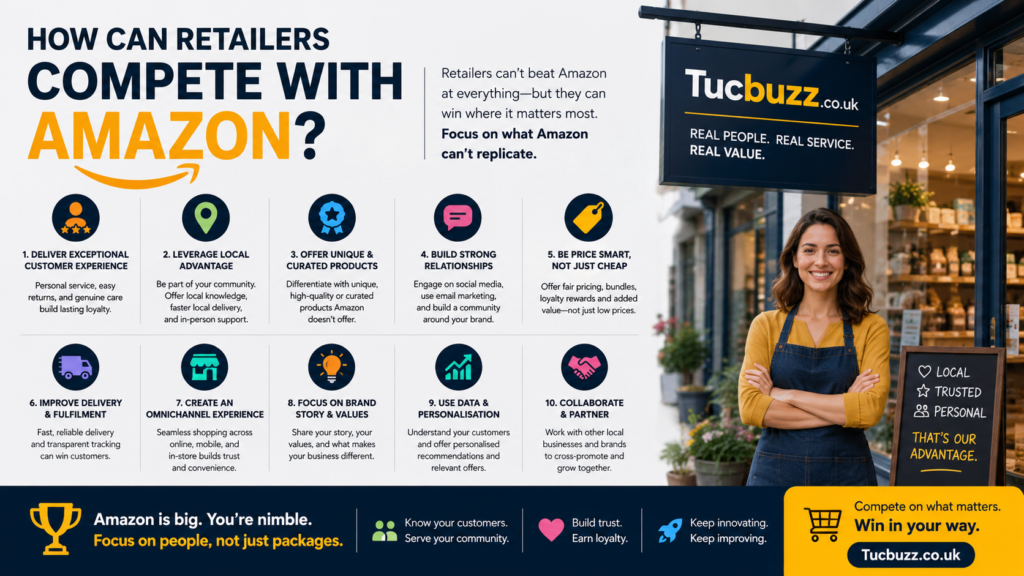
Retailers often underestimate the power of specialization. How can retailers compete with amazon broad approach means it cannot deeply serve every niche with the same level of expertise or passion. Retailers who understand their audience intimately can provide guidance, education, and reassurance that a generic marketplace simply cannot replicate. This expertise builds trust and positions the retailer as a go-to authority.
Local presence and cultural relevance also present opportunities. Independent retailers can respond quickly to regional trends, preferences, and events. Whether through locally sourced products or community-focused initiatives, these businesses can form emotional bonds with customers. Amazon’s centralized structure makes it difficult to replicate this sense of belonging.
Finally, transparency and authenticity are areas where retailers can stand out. Customers increasingly care about how products are made, who makes them, and the values behind a brand. Retailers who openly share their story, mission, and ethics can attract loyal customers who prioritize meaning over convenience.
Differentiation Through Unique Value Propositions
A strong value proposition is the foundation of How can retailers compete with amazon. Retailers must clearly articulate why customers should choose them instead of a massive marketplace. This begins with brand identity—defining what the business stands for and how it improves customers’ lives beyond the transaction itself.
Exclusive and private-label products are powerful differentiation tools. When customers cannot find the same product elsewhere, price comparison becomes irrelevant. Retailers can also emphasize craftsmanship, quality, and storytelling to elevate perceived value. These elements transform products into experiences, making them memorable and shareable.
Sustainability and ethical practices further strengthen differentiation. Retailers that prioritize responsible sourcing, fair labor, and environmental impact appeal to conscious consumers. While Amazon offers convenience, it often lacks a compelling ethical narrative. Retailers who lead with purpose can capture customers seeking alignment with their values.
Competing on How can retailers compete with amazon
Price competition with How can retailers compete with amazon, but customer experience is an area where retailers can excel. Personalized service, whether online or in-store, creates moments that customers remember. Simple actions like tailored recommendations, responsive support, and follow-up communication build trust and loyalty.
Retailers can also design frictionless experiences that rival large platforms. Clear navigation, transparent policies, and easy returns reduce anxiety and increase conversions. When customers feel valued and supported, they are more forgiving of slightly higher prices.
Moreover, emotional engagement matters. Creating delight through packaging, handwritten notes, or surprise rewards adds a human touch that How can retailers compete with amazon cannot easily replicate. These experiences foster long-term relationships rather than one-time transactions, turning customers into advocates.
Leveraging Omnichannel Retail Strategies
Omnichannel retailing bridges the gap between digital and physical experiences. Retailers who integrate online stores with brick-and-mortar locations offer flexibility that customers increasingly expect. Services like buy online, pick up in-store combine convenience with immediacy.
Physical stores can evolve into experience centers rather than purely transactional spaces. Hosting workshops, demonstrations, or community events deepens engagement and drives foot traffic. These interactions strengthen brand loyalty and create opportunities for upselling and cross-selling.
Consistency across channels is essential. Messaging, pricing, and service standards should feel seamless whether customers shop online, on mobile, or in-store. This unified experience reinforces trust and positions retailers as modern, customer-focused brands.
Using Technology and Data Strategically
Technology enables retailers to compete smarter, not bigger. Data-driven insights help optimize inventory, forecast demand, and reduce waste. By understanding customer behavior, retailers can personalize marketing and improve retention without massive budgets.
Customer relationship management systems allow businesses to track preferences, purchase history, and engagement. This data fuels targeted campaigns that feel relevant rather than intrusive. Automation tools further streamline operations, freeing teams to focus on creativity and service.
Importantly, agility matters more than scale. Smaller retailers can test, iterate, and adapt faster than large corporations. By embracing flexible technologies, they can respond quickly to market changes and customer feedback.
Conclusion
Competing with How can retailers compete with amazon does not require matching its size, speed, or pricing power. Instead, retailers succeed by focusing on what makes them unique—human connection, expertise, authenticity, and community. By leveraging differentiation, customer experience, and smart technology, retailers can build resilient businesses that thrive alongside e-commerce giants.
The future of retail belongs to brands that understand their customers deeply and deliver value beyond convenience. Rather than viewing Amazon as an unbeatable rival, retailers should see it as a catalyst for innovation and clarity of purpose.
You may read: Rita Case Age