
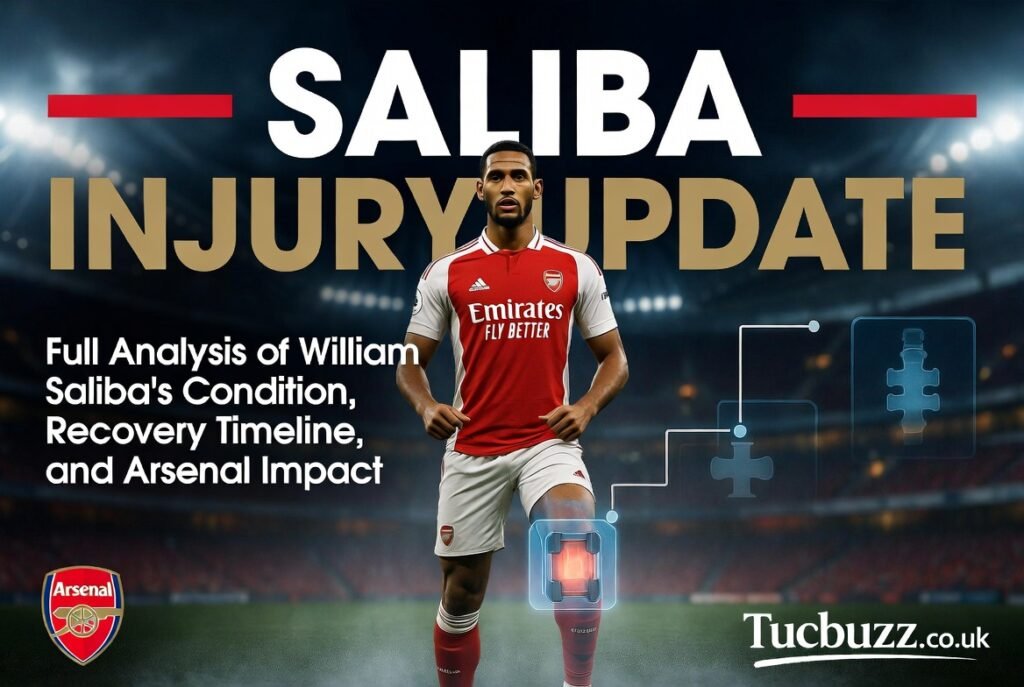

The recent concern surrounding the Saliba injury has become a major talking point in English football, especially among Arsenal supporters. As one of the most reliable defenders in the Premier League, any setback involving William Saliba immediately raises questions about Arsenal’s defensive stability and title ambitions.
William Saliba has developed into a cornerstone of Arsenal’s backline under Mikel Arteta. His calm presence, physical strength, and elite ball-playing ability make him one of the most complete centre-backs in Europe. When news of an injury emerges, it naturally triggers concern not only about his availability but also about how Arsenal will adapt without him.
This article provides a complete breakdown of the Saliba injury situation, including what happened, possible diagnosis, recovery expectations, tactical impact, and what fans can realistically expect in the coming weeks.
Saliba Injury Details: What Happened on the Pitch
The Saliba injury typically begins with an in-game incident that may look minor at first but raises immediate concern due to the player’s reaction. In most reported cases, Saliba has been involved in high-intensity defensive situations where quick turns, tackles, or aerial duels put strain on his lower body.
During such moments, he may signal discomfort or request treatment from medical staff. Even if he initially attempts to continue, Arsenal’s coaching team often opts for caution given his importance. A forced substitution is usually the first sign that the issue may not be minor.
What makes this situation more concerning is Saliba’s playing style. He relies heavily on acceleration, positioning recovery, and physical duels. Any issue involving his ankle, hamstring, or knee can significantly affect his performance level, which is why even small knocks are treated seriously by the club.
Early reactions from fans often range from optimism to worry, especially when the injury occurs during a crucial Premier League or Champions League fixture. However, until official medical confirmation is released, much of the early information remains speculative.
Medical Assessment and Diagnosis
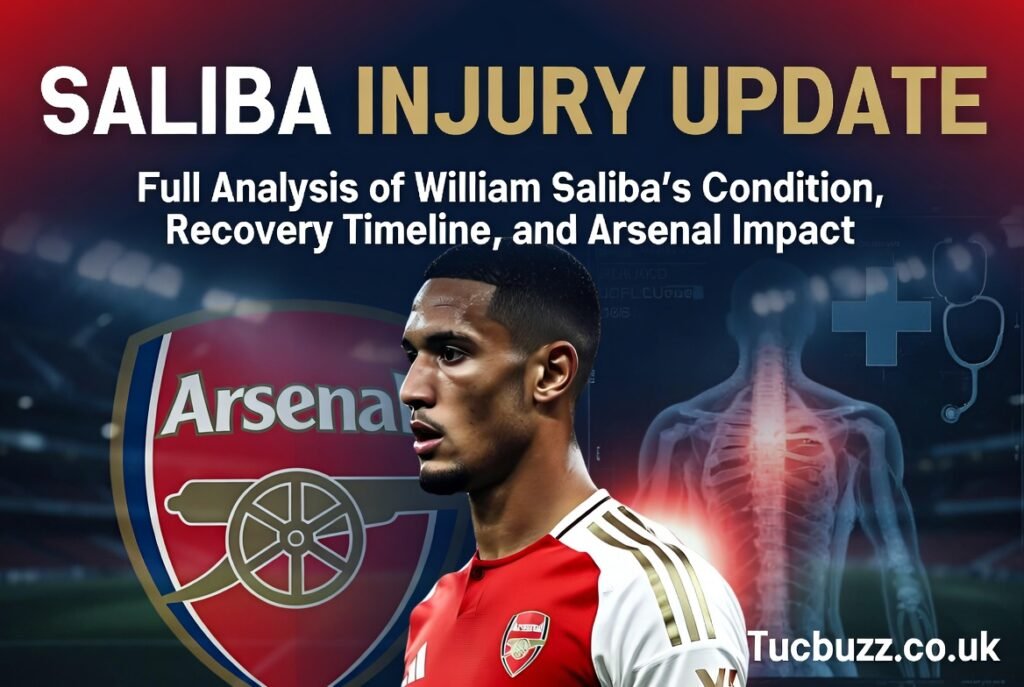
Once the match ends, Arsenal’s medical team immediately begins a structured evaluation of the Saliba injury. This process includes physical examination, mobility testing, and often advanced imaging such as MRI or ultrasound scans to determine the exact nature of the problem.
In many cases involving elite defenders like Saliba, the injury falls into one of several categories: muscle strain, ligament stress, or minor joint impact. A muscle-related issue, such as a hamstring strain, is one of the most common concerns in high-speed football environments. Ligament involvement, however, tends to raise more serious concerns and requires longer recovery periods.
The club typically issues a controlled medical update to avoid misinformation. These updates are usually cautious in tone, stating that the player is “being assessed” or “under observation.” This approach helps prevent unnecessary panic while medical experts complete their evaluation.
Sports medicine analysts often emphasize that early diagnosis is critical. Even a minor injury can worsen if a player returns too quickly. For someone like Saliba, who is central to Arsenal’s defensive system, the club prioritizes long-term fitness over short-term availability.
Recovery Timeline and Rehabilitation Process
The recovery timeline for a Saliba injury depends heavily on severity. If the issue is minor, such as a light muscle strain or knock, recovery may take anywhere from a few days to two weeks. In such cases, the player typically follows a controlled recovery plan involving rest, light training, and gradual reintegration.
For moderate injuries, rehabilitation becomes more structured. This includes physiotherapy sessions, strength recovery exercises, and monitored pitch training. The focus is not just on healing but also on restoring full match fitness, which is essential for a defender who relies on explosive movement and physical duels.
More serious injuries can extend recovery into several weeks or even months. However, Arsenal’s medical team is known for its conservative approach, meaning they rarely rush players back before they are fully ready. This reduces the risk of recurrence, which is particularly important for a player of Saliba’s importance.
Before returning to competitive matches, Saliba must complete multiple fitness checkpoints, including sprint tests, tactical drills, and full-contact training sessions. Only after passing these benchmarks would he be cleared to return to Premier League action.
Arsenal’s Defensive Impact Without Saliba
The absence of William Saliba creates a noticeable tactical gap in Arsenal’s defense. His partnership with other defenders provides balance, allowing the team to maintain a high defensive line while remaining secure against counterattacks.
Without him, Arsenal often has to adjust its structure. This may involve a deeper defensive line, increased midfield support, or changes in pressing intensity. These adjustments can slightly reduce the team’s fluidity, especially against high-pressing or counter-attacking opponents.
Replacement options within the squad are capable but may not replicate Saliba’s unique combination of composure, pace, and aerial dominance. This forces the manager to rethink defensive rotations and sometimes even midfield positioning to compensate for the missing stability.
The psychological impact is also significant. Saliba is not just a defender but a leader in defensive organization. His absence can affect communication and confidence at the back, particularly in high-pressure matches where small mistakes can be costly.
Manager and Club Reactions
Arsenal manager Mikel Arteta is typically cautious when discussing injuries, especially involving key players. His comments about the Saliba injury often emphasize patience, medical evaluation, and squad depth rather than speculation about return dates.
The club’s official communication strategy is designed to manage expectations. Instead of providing exact timelines, they focus on recovery progress and daily assessment updates. This helps avoid pressure on the player while maintaining transparency with fans.
Behind the scenes, the coaching staff adjusts training routines and tactical planning depending on Saliba’s availability. His absence often leads to experimental defensive setups during training sessions to prepare for upcoming matches.
Teammates also play a role in maintaining stability. Senior defenders and midfielders often take on additional responsibility in organizing the backline during his absence.
Fan and Media Reaction
The Saliba injury quickly becomes a trending topic among Arsenal supporters and football media outlets. Fans often express concern due to his importance in the title race and European competitions.
Social media amplifies both accurate updates and speculation, which can sometimes create confusion. Media outlets may also publish early predictions before official medical confirmation, leading to mixed messaging.
Despite this, most supporters recognize Saliba’s importance and prioritize his full recovery over a quick return. The consensus among analysts is that Arsenal performs significantly better when he is fully fit.
Long-Term Outlook
Fortunately, there is no widespread indication that the Saliba injury poses a long-term threat to his career. Modern sports science and Arsenal’s medical infrastructure are designed to manage such situations effectively.
The key focus remains workload management. As a young but heavily used defender, monitoring his minutes and recovery cycles is essential to prevent recurring issues.
If managed properly, Saliba is expected to return to peak performance and continue developing as one of Europe’s top defenders. His long-term role at Arsenal remains central to the club’s defensive ambitions.
Conclusion
The Saliba injury situation highlights both the importance of player fitness management and the impact a single defender can have on an elite football team. While any injury to William Saliba naturally raises concern, Arsenal’s structured medical approach and squad depth provide reassurance.
With proper recovery and careful reintegration, Saliba is expected to return strongly and continue being a key figure in Arsenal’s defensive setup. For fans, patience remains essential as the club prioritizes long-term performance over short-term risk.
You may read: Knox jolie pitt