

Ach vs wire transfer In today’s fast-moving digital economy, money no longer needs days of physical movement between banks. Instead, electronic fund transfers have become the backbone of modern financial transactions. Two of the most widely used methods are ACH vs Wire Transfer, both designed to move money securely between bank accounts, yet they operate in very different ways.
ACH (Automated Clearing House) is a batch-based payment system commonly used in the United States for everyday transactions like payroll, bill payments, and direct deposits. It processes transactions in groups rather than individually, which makes it cost-effective but relatively slower. On the other hand, wire transfers are direct bank-to-bank transactions that process in real-time or near real-time, making them ideal for urgent or high-value payments.
Understanding the difference between ACH and wire transfers is important for both individuals and businesses. Choosing the wrong method can result in unnecessary fees, delays, or even irreversible errors. This guide explores both systems in detail so you can confidently decide which payment method suits your financial needs.
What Is an Ach vs wire transfer?
Ach vs wire transfer is an electronic money transfer processed through the Automated Clearing House network, a centralized system that handles large volumes of transactions in batches. Instead of processing payments individually, banks group ACH transactions and settle them at scheduled intervals throughout the day. This system makes ACH transfers efficient, affordable, and widely used for recurring payments.
ACH transfers are commonly divided into two types: ACH credit and ACH debit. ACH credit occurs when money is pushed into an account, such as an employer sending a paycheck via direct deposit. ACH debit, on the other hand, is when money is pulled from an account, such as automatic utility bill payments or subscription services. This flexibility makes ACH one of the most versatile payment systems in modern banking.
Typically, ACH transfers take 1–3 business days to complete, although same-day ACH is becoming more common in some regions. The slower processing time is due to its batch-based structure, but this also allows banks to reduce costs significantly. ACH transfers are often free or very low-cost, making them ideal for regular, predictable payments.
However, Ach vs wire transfer do have limitations. They are not suitable for urgent payments, and processing delays can occur due to weekends or bank holidays. Despite this, ACH remains a preferred method for businesses handling payroll, vendors, and recurring transactions.
What Is a Ach vs wire transfer?
Ach vs wire transfer is a direct electronic transfer of funds from one bank account to another, processed individually rather than in batches. Unlike ACH, wire transfers are designed for speed and immediacy, making them one of the fastest ways to move money domestically or internationally.
Wire transfers can be either Ach vs wire transfer. Domestic wire transfers usually complete within the same business day, often within hours. International wire transfers, however, may take 1–5 business days due to currency conversion and intermediary bank processing, often handled through systems like SWIFT.
One of the biggest advantages of Ach vs wire transfer is speed. Because they are processed in real-time, they are commonly used for urgent financial needs such as real estate purchases, large business deals, or emergency fund transfers. Once initiated and processed, the funds are typically final and cannot be easily reversed.
However, this speed comes at a cost. Wire transfers are significantly more expensive than ACH transfers, with fees ranging from moderate to high depending on the bank and whether the transfer is domestic or international. Additionally, mistakes in account details can lead to irreversible losses, making accuracy extremely important.
Key Differences Between ACH vs Wire Transfer
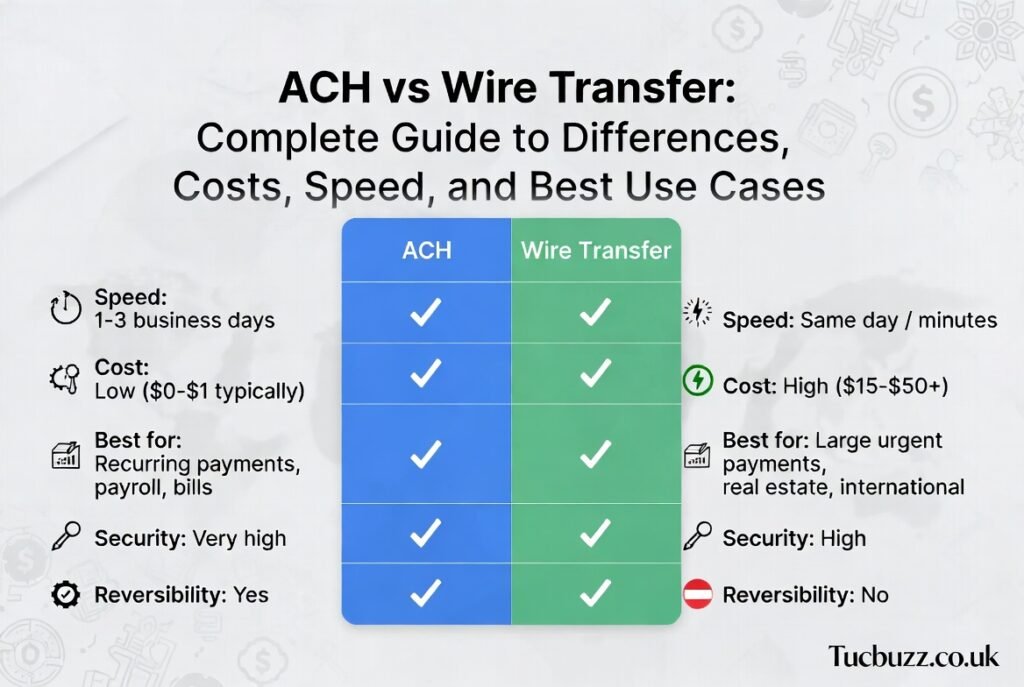
When comparing ACH vs Wire Transfer, several important differences stand out, especially in terms of speed, cost, and transaction structure. ACH transfers operate in batches, meaning multiple transactions are grouped and processed together at scheduled times. Wire transfers, however, are processed individually and in real time, offering faster settlement.
Speed is one of the most noticeable differences. Ach vs wire transfer typically take 1–3 business days, while wire transfers can be completed within hours. This makes wire transfers ideal for urgent payments, whereas ACH is better suited for non-urgent, scheduled transactions.
Cost is another major factor. Ach vs wire transfer are usually free or very low-cost, especially for businesses handling high volumes of payments. Wire transfers, on the other hand, can be expensive due to bank fees and intermediary charges, particularly for international transactions.
Security and reversibility also differ. Ach vs wire transfer payments can sometimes be reversed in cases of error or fraud, offering an additional layer of protection. Wire transfers are generally final once processed, which increases risk if incorrect details are entered. These differences make each method suitable for specific financial situations.
Cost, Speed, and Security Comparison
From a cost perspective, Ach vs wire transfer are the clear winner for routine transactions. Businesses often prefer ACH because it reduces operational costs when handling payroll, vendor payments, or subscriptions. Wire transfers, while faster, come with higher fees that can add up quickly, especially for frequent use.
In terms of speed, Ach vs wire transfer dominate. They are processed almost instantly once approved by the bank, making them ideal for time-sensitive transactions. ACH transfers, while improving with same-day processing options, still lag behind due to their batch-based system.
Security is strong in both systems, but they differ in structure. ACH transfers benefit from a window of error correction, which can be useful if fraud or mistakes occur. Wire transfers, however, are more secure in terms of immediate settlement but offer little room for reversal once completed. This makes verification critical before sending funds.
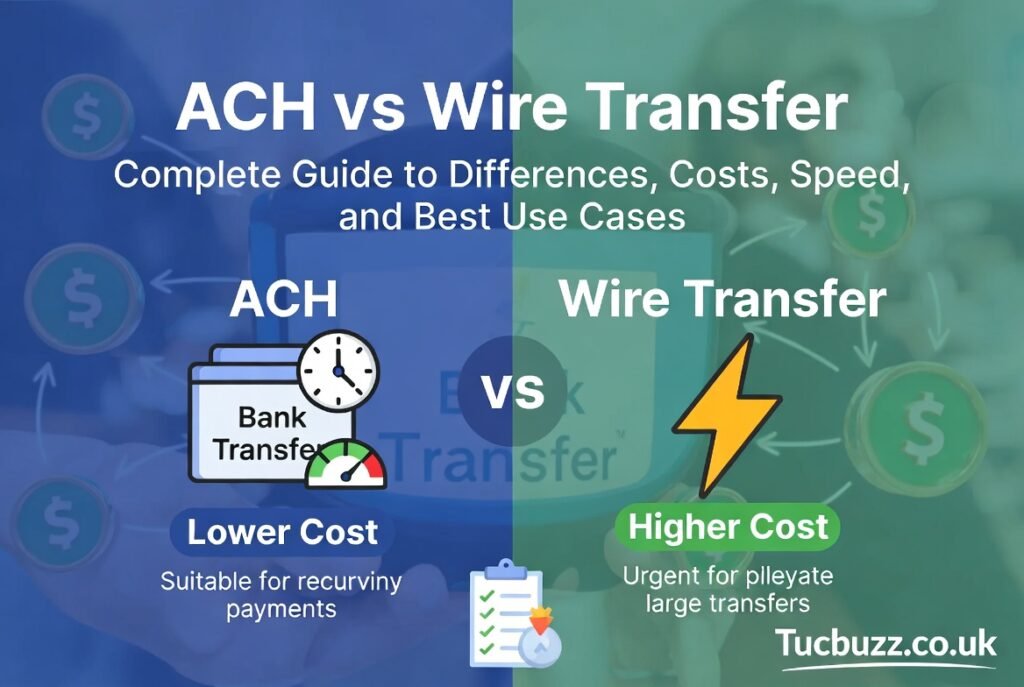
Overall, the choice depends on priorities: cost efficiency favors ACH, while urgency and immediacy favor wire transfers.
When to Use ACH vs Wire Transfer
Choosing between ACH and Ach vs wire transfer depends on the purpose of the transaction. Ach vs wire transfer are best for recurring and low-value payments. This includes payroll processing, subscription billing, utility payments, and vendor transactions. Businesses often rely on ACH because it is cost-effective and reliable for scheduled payments.
Ach vs wire transfer , however, are best for urgent or high-value transactions. They are commonly used in real estate deals, large corporate payments, and international money transfers where speed is critical. If funds must arrive the same day or within hours, wire transfers are usually the preferred choice.
A simple rule of thumb is this: use ACH when time is flexible and cost matters more, and use wire transfers when speed and certainty are the top priorities. Understanding this distinction helps individuals and businesses avoid unnecessary fees and delays.
Conclusion
The comparison of ACH vs Wire Transfer highlights two powerful but very different financial tools. ACH transfers are slow but affordable, making them ideal for routine and recurring payments. Wire transfers, on the other hand, are fast and direct but come with higher costs and less flexibility for corrections.
Ultimately, the best choice depends on your financial needs. If you value efficiency and low cost, ACH is the smarter option. If speed and urgency are critical, wire transfers provide the reliability you need. By understanding how each system works, you can make smarter financial decisions and manage money transfers more effectively in both personal and business contexts.
You may read: Saliba injury